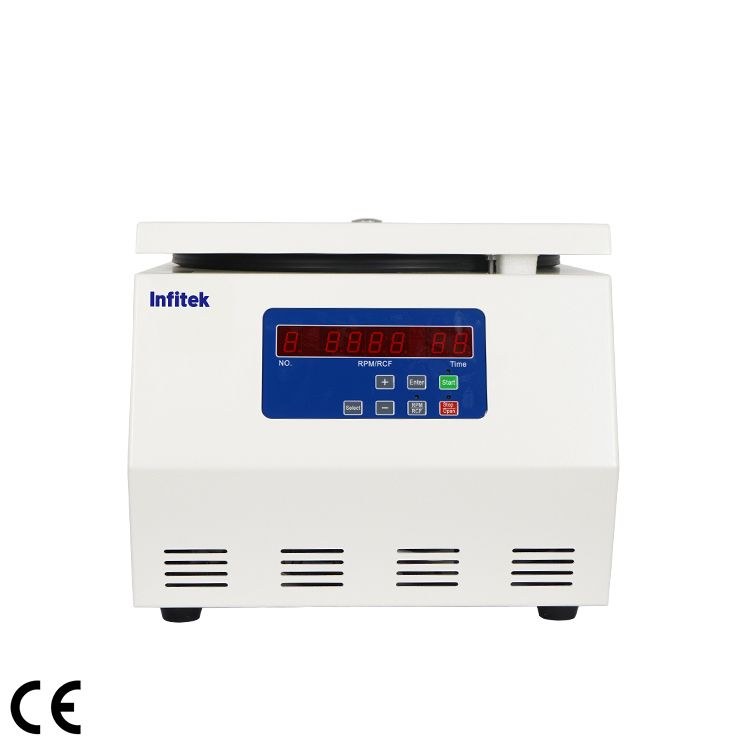
Benchtop Low Speed Centrifuge CFG-5DK
Benchtop low speed centrifuge reaching 5500 r/min and 5310 ×g with a maximum capacity of 4 × 500 mL and swing rotors for tubes and microplates.
View product


Floor-standing deionized water purifiers producing 45 to 150 L/h, with RO and deionized outlets and water meeting GB6682-2008 Grade 1 laboratory standard.
Key specifications
LWP-F5 Series Floor-Standing Deionized Water Purifier
Request a quoteOverview
The LWP-F5 series are floor-standing deionized water purifiers for higher-volume laboratory demand. Five models produce 45, 60, 90, 120 and 150 L/h from municipal tap water using five stages: a 5 µm PP filter, granular activated carbon, compressed activated carbon, an RO membrane and a deionisation tank.
Two outlets supply RO water with TDS below 10 ppm and salt rejection above 95%, and deionized water at 10 to 16 MΩ·cm with conductivity below 0.1 µS/cm, meeting the GB6682-2008 Grade 1 laboratory water standard. Rejection exceeds 96% for inorganic ions and 99% for dissolved organics, particles and microbes. A fully automatic microcomputer with dual LCD screens shows power, water, pump, flush, low water and tank-full status, and online monitoring tracks water quality. Automatic and timed RO flushing extends membrane life.
Castors and fixed stands make installation and moving straightforward. A TDS pen is included, and pressure tank options include built-in or external 11 gallon tanks or an external 60 L tank. Uses include feed water for biochemical and immunoassay analysers, environmental test chambers, autoclaves and general laboratory work.
Specifications
13 parameters
Five models from 45 to 150 L/h for larger laboratories.
Deionized water at 10 to 16 MΩ·cm meeting GB6682-2008 Grade 1.
PP filter, granular and compressed carbon, RO membrane and deionisation tank.
Fully automatic microcomputer with real-time status display and online monitoring.
Automatic anti-scaling and timed flushing extend membrane life.
Castors and fixed stands for easy installation and relocation.
Al-Shaker specifies the configuration, documents the system, and supports it across Jordan, the GCC, and MENA.
Consult
Plan
Supply
Install
Train
Support
Benchtop low speed centrifuge reaching 5500 r/min and 5310 ×g with a maximum capacity of 4 × 500 mL and swing rotors for tubes and microplates.
View product
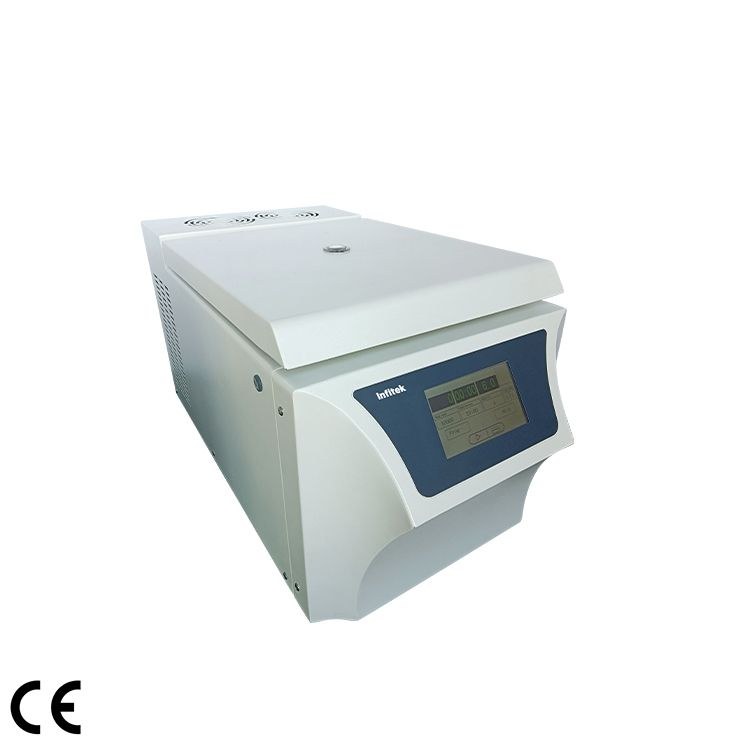
High speed refrigerated centrifuge reaching 16500 r/min and 21380 ×g with temperature control from -20 to 40°C, suited to gene, protein and nucleic acid work.
View product
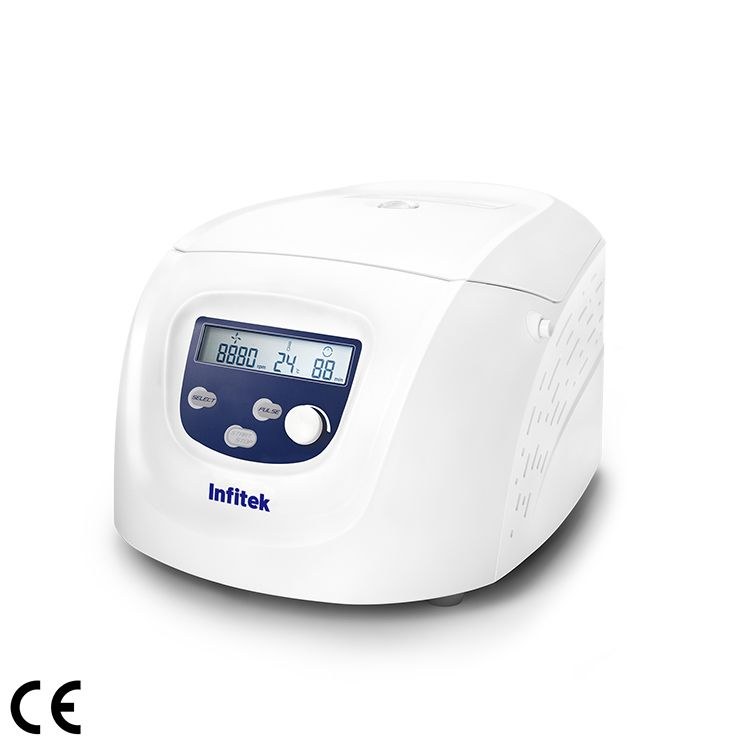
Compact microhematocrit centrifuges spinning 24 capillary tubes at up to 12000 rpm and 13680 ×g, driven by maintenance-free brushless DC motors.
View product
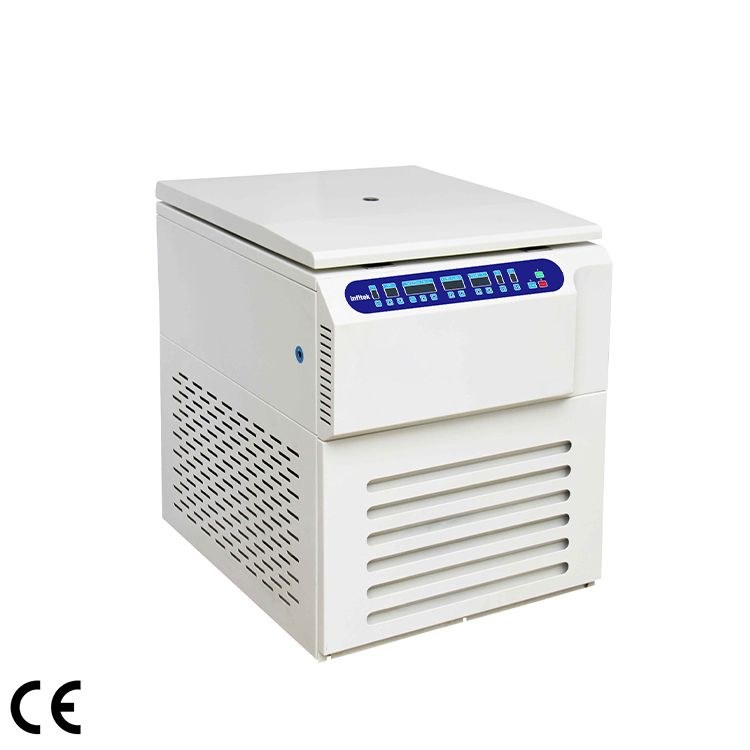
Floor-standing low speed refrigerated centrifuge with 6 × 1000 mL capacity, up to 6000 r/min and 6600 ×g, and temperature control from -20 to 40°C.
View product
Talk to the technical team
Share the workflow, capacity, and compliance constraints. We respond with a recommended configuration, not a generic catalogue list.