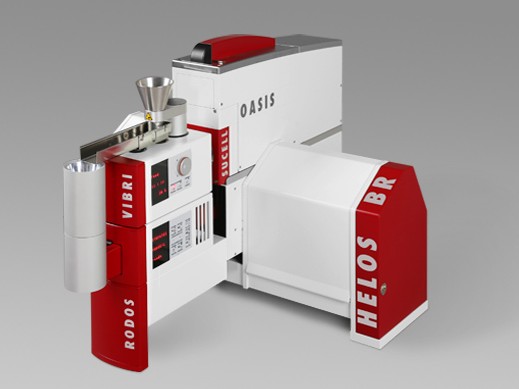
Sympatec Laser Diffraction Systems
HELOS laboratory and MYTOS process laser diffraction for powders, granules, suspensions, emulsions, and sprays from below 0.1 µm to 8,750 µm.
View product


Reference: OPUS-AF
Robust ultrasonic extinction probe with adapter flange for real-time particle size and concentration monitoring in process lines and vessels, below 0.1 to 3,000 µm.
Key specifications
OPUS-AF in-line ultrasonic extinction sensor (adapter flange)
Request a quoteOverview
OPUS-AF mounts the OPUS ultrasonic extinction probe directly in a process line or reactor via a DN100 adapter flange (DN150 and DN200 available). The measuring finger, 89 mm in diameter with a standard installation length of 336 mm, is immersed in the product stream or vessel medium.
It monitors particle size distribution and concentration in real time, even in highly concentrated and opaque suspensions and emulsions. It is intended for pipes of 200 mm and larger or for vessels, with finger lengths up to 3,500 mm for large reactors and an optional docking positioner and cleaner.
Specifications
10 parameters
Continuous real-time analysis in the process.
-20 to 120 °C, PN40, pH 1 to 14.
Up to 3,500 mm for large reactors.
Modbus, Profibus, OPC and analogue outputs.
Al-Shaker specifies the configuration, documents the system, and supports it across Jordan, the GCC, and MENA.
Consult
Plan
Supply
Install
Train
Support
HELOS laboratory and MYTOS process laser diffraction for powders, granules, suspensions, emulsions, and sprays from below 0.1 µm to 8,750 µm.
View product
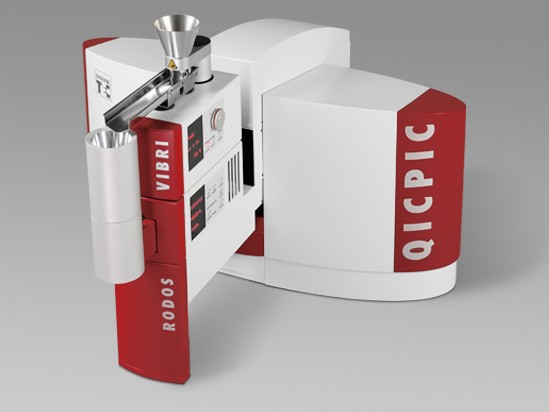
QICPIC laboratory and PICTOS process image analysis for particle size and shape from 1 µm to 34,000 µm.
View product
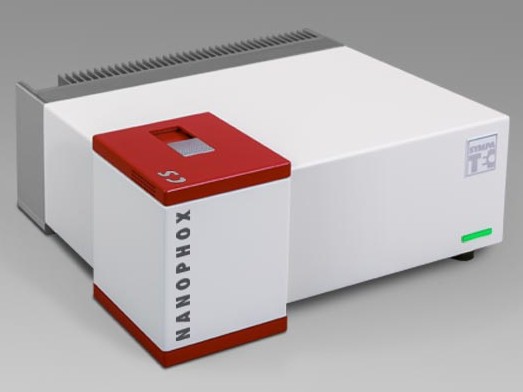
Photon cross-correlation (PCCS) for nanoparticles in turbid suspensions and emulsions from 0.5 nm to 10,000 nm, without extreme dilution.
View product
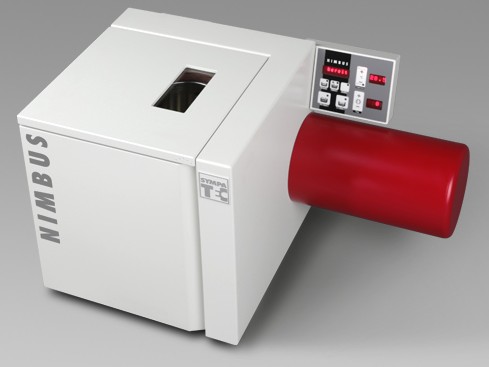
NIMBUS laboratory and OPUS process analysers for particle size and concentration in suspensions and emulsions from below 0.1 µm to 3,000 µm.
View product
Talk to the technical team
Share the workflow, capacity, and compliance constraints. We respond with a recommended configuration, not a generic catalogue list.