Socorex
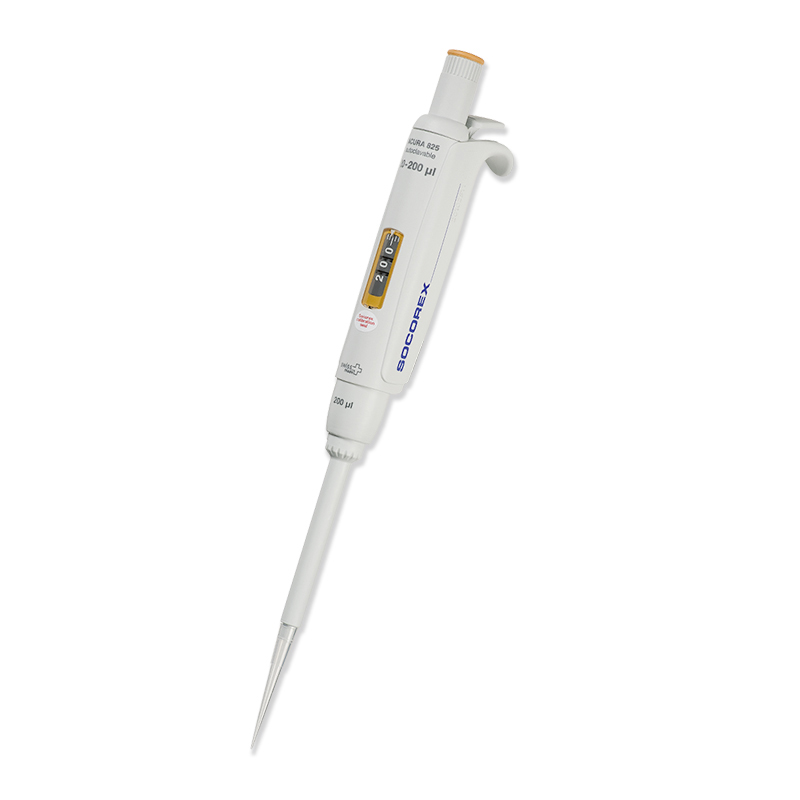
Socorex Acura manual pipettes
Swiss-made manual micropipettes: 825 for daily work, 826 XS for research, 835 macropipettes, 855 multichannel — Justip™ ejector, Swift-set calibration, three-year warranty.
View product

Equipment guide
Pipette accuracy depends on choosing the right volume range, using the correct tips and keeping the pipette calibrated to ISO 8655. Select the pipette whose nominal volume is closest to (and above) the volume you dispense most often, and calibrate on a fixed schedule.
Swiss-made manual micropipettes: 825 for daily work, 826 XS for research, 835 macropipettes, 855 multichannel — Justip™ ejector, Swift-set calibration, three-year warranty.
View product
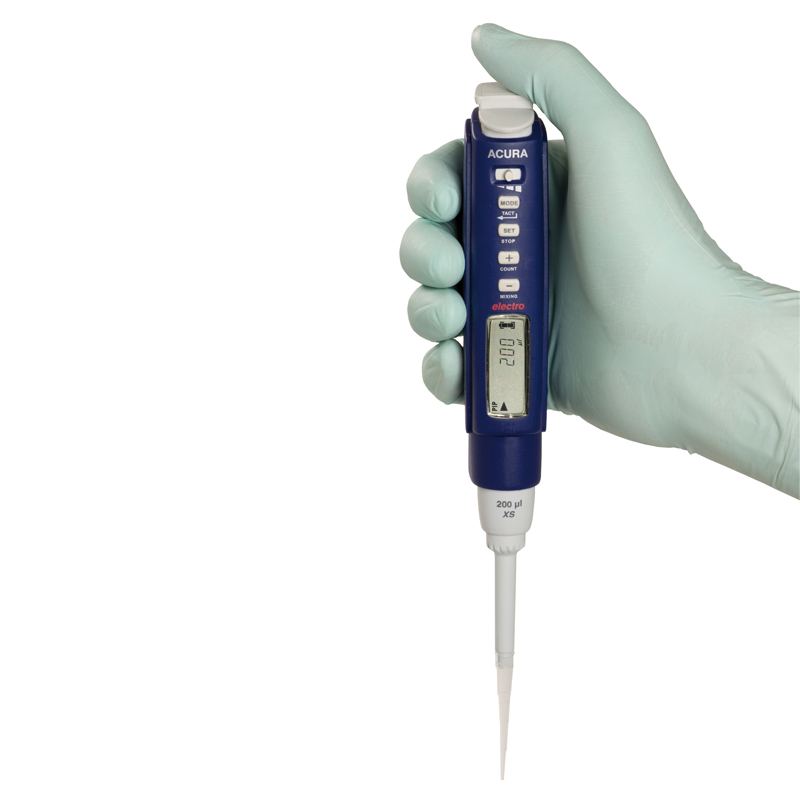
Electronic pipettes with a motor and six modes: 926 XS (0.1–1000 µL), 936 macropipette (0.1–10 mL), 956 multichannel — one control unit, 27 volumetric modules.
View product
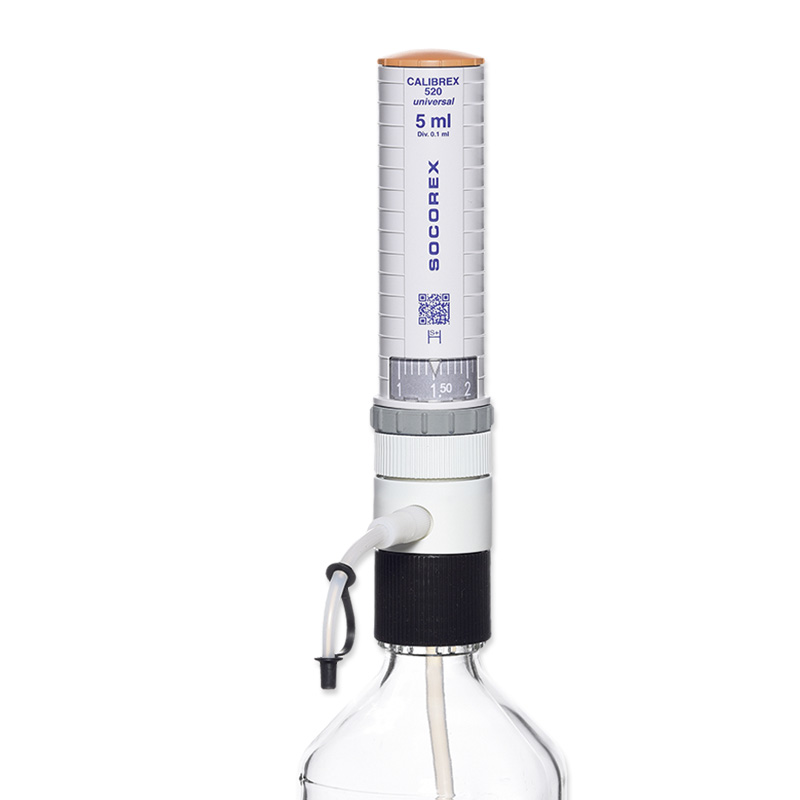
Bottle-top dispensers: universal 520 (0.25–10 mL), organo 525, solutae 530 (to 100 mL) — autoclave assembled, QR chemical chart, two-year warranty.
View product
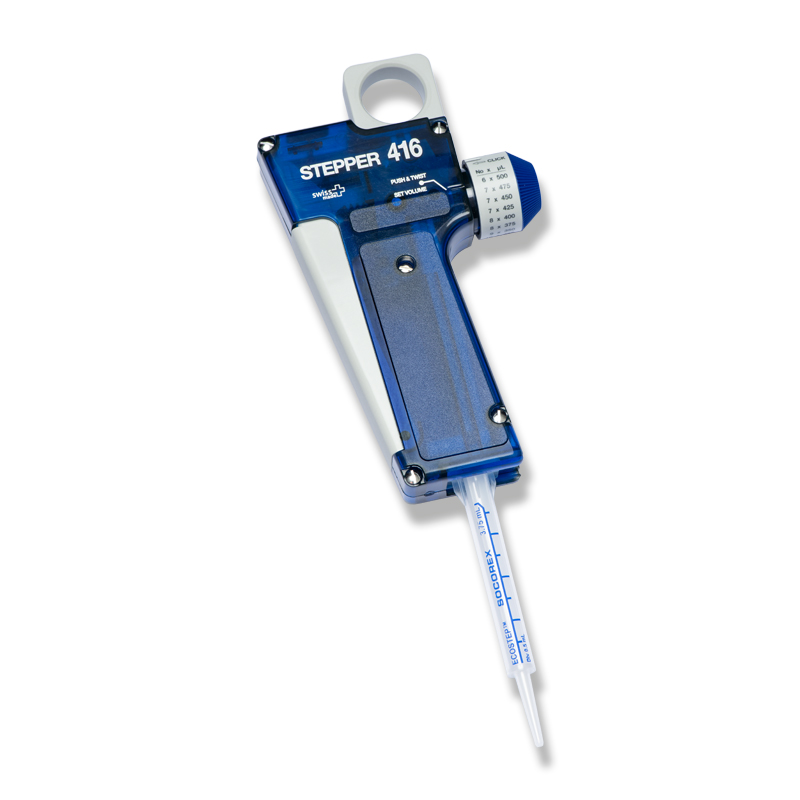
Trigger-action repeater, 10–5000 µL, up to 73 aliquots per fill — four-finger activation, three colour-coded Ecostep™ syringes, two-year warranty.
View product
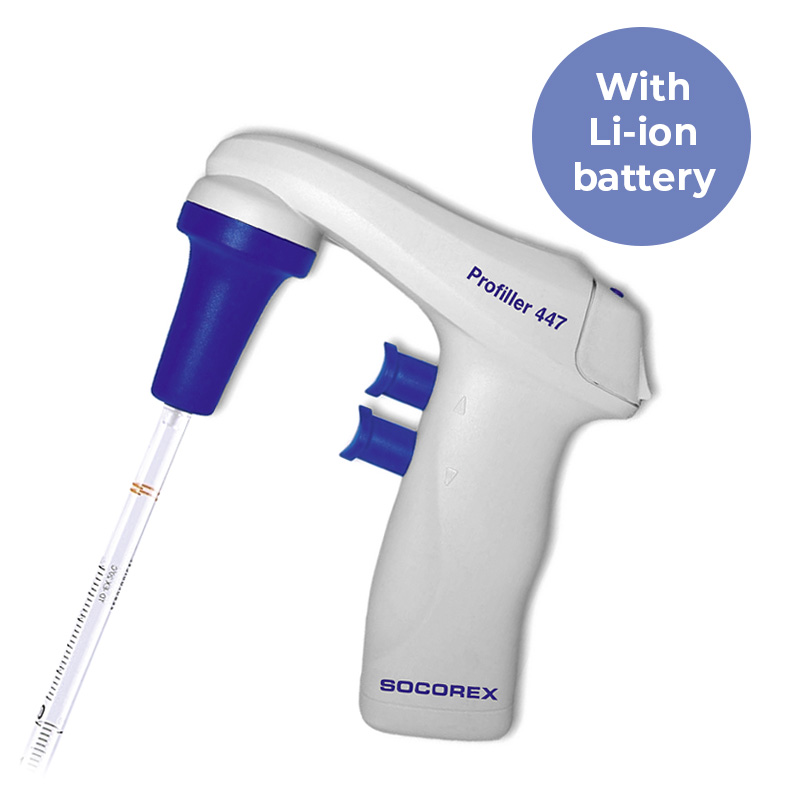
Electronic pipette controller for glass or plastic pipettes to 100 mL: 25 mL in 3 s, ~6 h Li-ion, TC/TD modes, for a laminar-flow cabinet.
View product
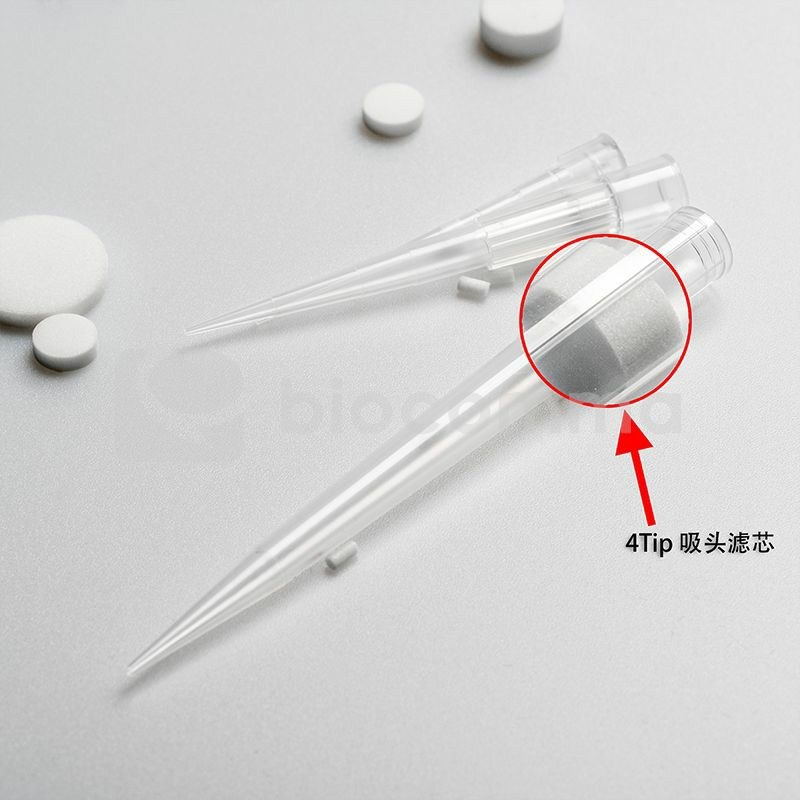
Inert hydrophobic UHMW-PE aerosol-barrier filters for pipette tips from 10 µL to 10 mL, free of RNase and DNase, in tens of precisely molded sizes.
View product
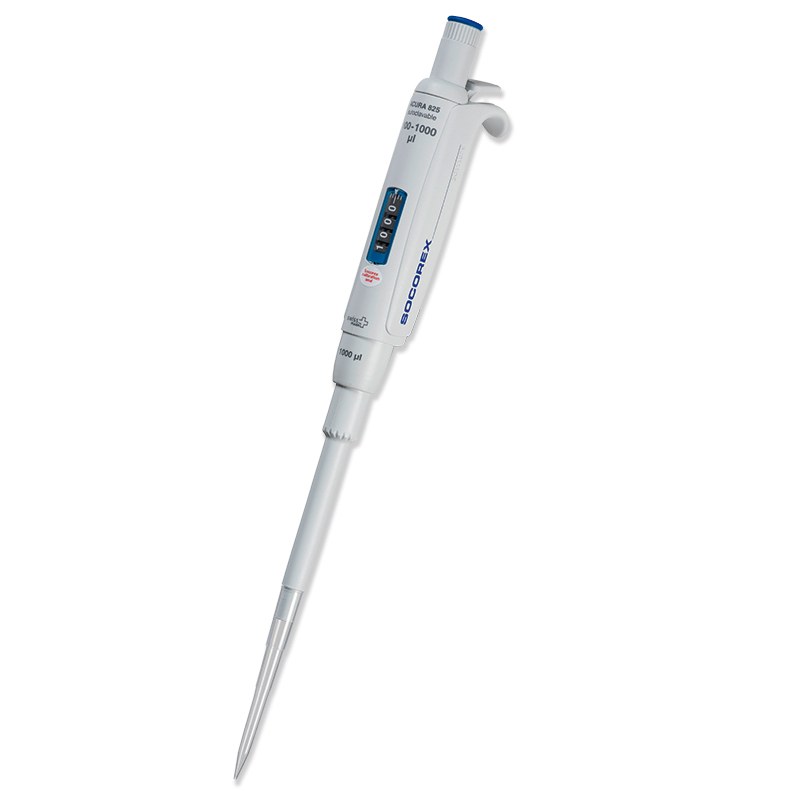
Classic single-channel manual micropipette from Socorex covering 0.1 to 1000 µL in eight models, with adjustable tip ejector and user calibration.
View product
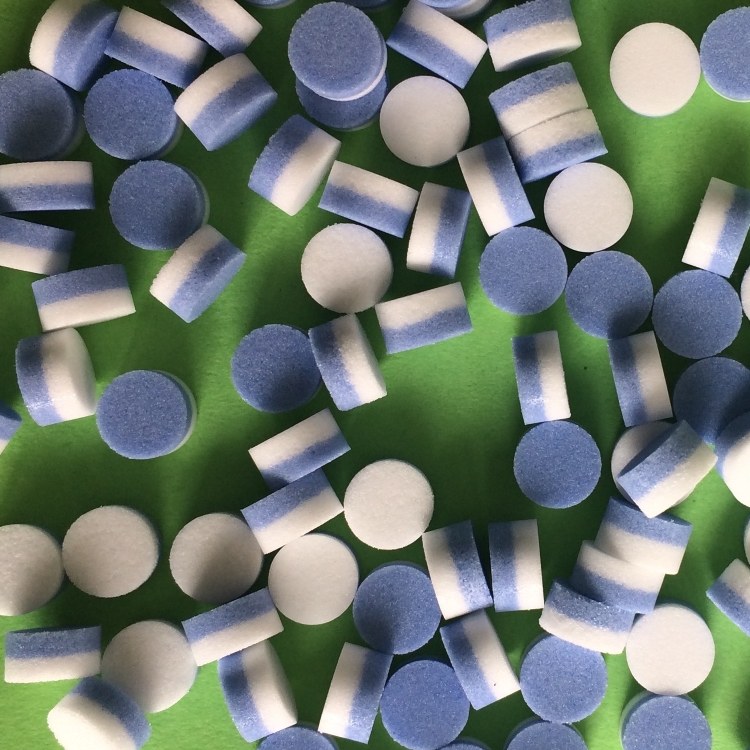
Two-layer hydrophobic UHMW-PE pipette-tip filters (5 µm top, 10 µm bottom) that block particles and molecules more thoroughly and are free of DNase, RNase and PCR inhibitors.
View product
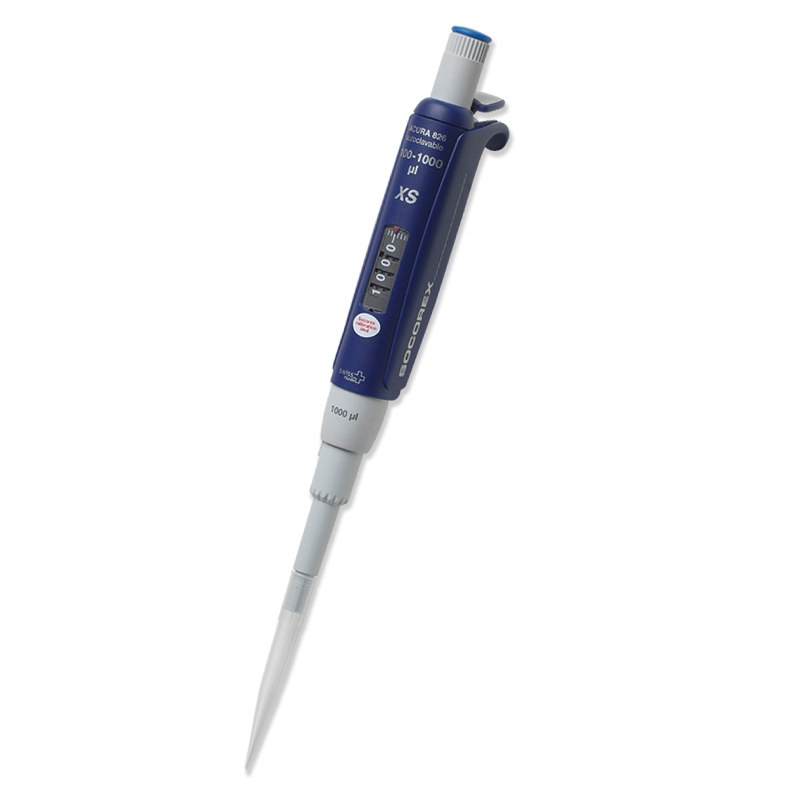
Research-oriented lightweight manual micropipette derived from the 825, with a shorter shaft, conical end and ultra-smooth plunger, 0.1 to 1000 µL.
View product
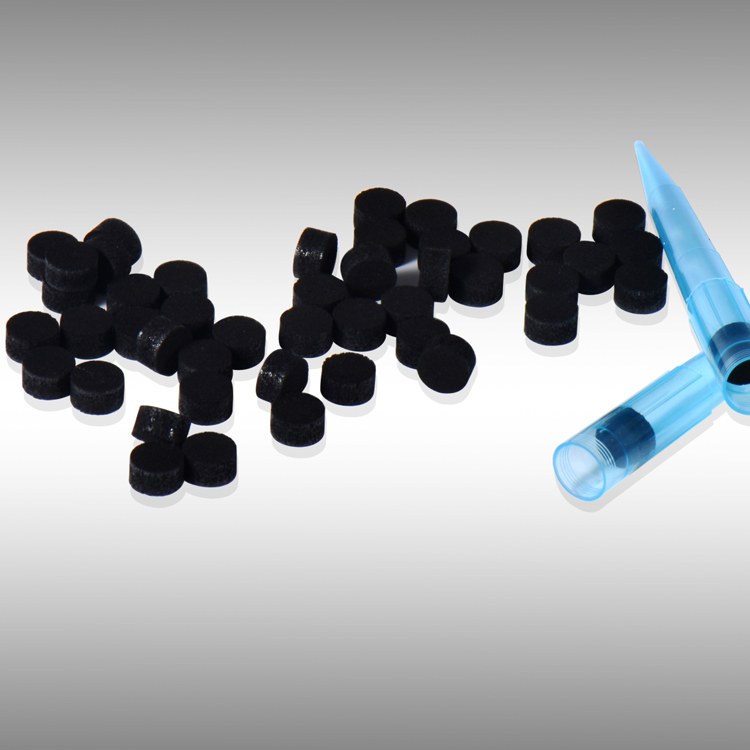
Pipette-tip filters with activated carbon particles fixed to an UHMW-PE surface, blocking aerosols and also helping to block the activity of biomolecules.
View product
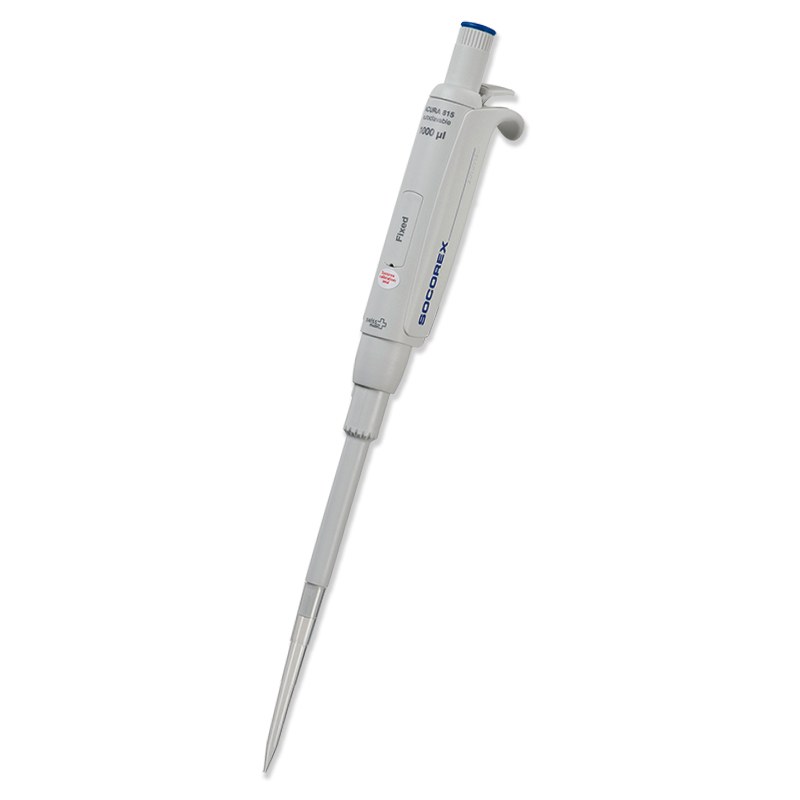
Fixed-volume manual micropipette delivering a single pre-set volume between 1 and 1000 µL, removing the risk of wrong volume setting in routine tests.
View product
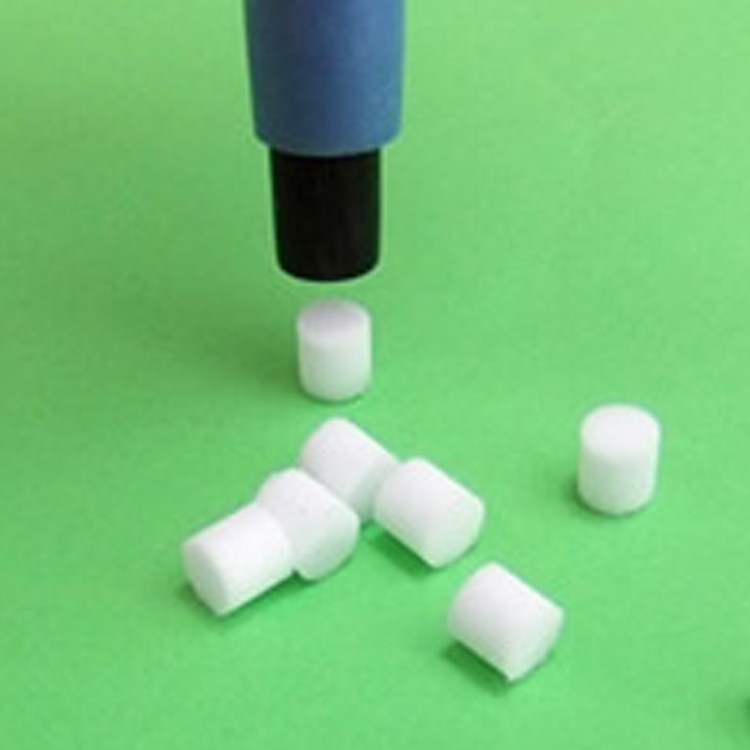
Replaceable filters that sit in the pipette itself, adding protection against corrosion and contamination from sample solutions and easy to reload.
View product
Work in the upper 10–100 % of a pipette's range for best accuracy. A small set of overlapping ranges covers most protocols.
Electronic pipettes reduce operator variation and add programs such as repeat dispensing and titration; manual models are simple and robust.
Use tips designed for the pipette. Aerosol-barrier filter tips protect against cross-contamination in PCR and sensitive work.
Calibrate on a fixed schedule (commonly every 6 to 12 months), and more often for heavy use or critical assays. Keep certificates for audits.
Light plunger force and a comfortable grip lower repetitive-strain risk in high-volume laboratories.
Each range is supplied with installation, operator training and local service.
ISO 8655 defines how a pipette is tested. Most laboratories calibrate every 6 to 12 months, and more often for heavy daily use or critical analyses. Check performance after any drop, repair or suspect result.
A pipette transfers a measured volume, usually microlitres to a few millilitres, into a vessel. A bottle-top dispenser mounts on a reagent bottle and repeatedly dispenses larger set volumes quickly.
Yes. Choose a pipette in the correct range and use our free dilution calculator to plan volumes before you start.
Talk to the technical team
Share the workflow, capacity, and compliance constraints. We respond with a recommended configuration, not a generic catalogue list.